
the
Opportunity
system
Helping organizations
identify,
prioritize,
and amplify the moments
that shape brand perception,
customer attention,
and market momentum.
Most companies are narrowing opportunity
before it is even evaluated.

The opportunity gap
Most organizations are full of smart people, strong products, and good ideas. Yet many opportunities never reach their full potential.
Not because of a lack of talent, resources, or ambition. But because opportunities are often viewed through habitual planning lenses.
Over time, those habits shape what gets noticed, what gets prioritized, and what makes it into the roadmap.
The challenge isn’t choosing between opportunities.
It’s identifying which opportunities exist in the first place.
The
Core
insight
Not every initiative requires the same level of ambition. But every meaningful customer moment deserves intentional strategic thinking.
Brand perception is no longer built through 1-2 major campaigns each year.
It is shaped through a continuous ecosystem of:
launches
regional moments
customer experiences
events and activations
partnerships
social storytelling
always-on momentum
emerging cultural signals
Each contributes to how the brand is understood, felt, and remembered.
The ecosystem defines the brand.
My framework
A system for expanding, structuring, and scaling opportunities across an organization.
01
Opportunity
Recognition
Expanding the field of what is considered possible.
Identifying:
cultural relevance
behavioral shifts
emotional territory
narrative potential
marketable moments
Before they are filtered out by habitual planning systems.
02
Momentum
Architecture
How opportunities are structured across time and ambition.
So organizations can scale ambition without losing coherence.
Includes:
flagship initiatives
regional moments
mid-tier campaigns
experimentation
always-on storytelling
03
Distributed
Brand System
How brand is built across a connected ecosystem of activity.
So the ecosystem builds the brand, not individual campaigns.
Includes:
product moments
campaigns
events
partnerships
social initiatives
creator activity
04
Momentum
Escalation
Turning signals into scale.
Identifying when:
traction
cultural timing
audience response
customer behavior
justify increased investment or ambition.
So opportunities don’t die outside the roadmap.
Services
Executive
Opportunity
Alignment
A working session with leadership teams to expand strategic ambition before roadmaps are finalized.
Focus:
identifying overlooked opportunities
challenging habitual definitions of “news”
aligning on ambition levels across initiatives
Opportunity
System
Mapping
A diagnostic across product, marketing, and brand activity to surface underleveraged moments.
Includes:
customer behavior signals
cultural and regional insights
launch pipeline review
narrative opportunities
Momentum
Planning
System
Building the structure for how a company prioritizes and sequences initiatives across a year.
Includes:
launch tiering
campaign architecture
investment balance
always-on integration
Launch
& Attention
Architecture
Defining how individual initiatives become brand-defining moments.
Includes:
narrative framing
creative ambition level
cross-channel expression
ecosystem integration

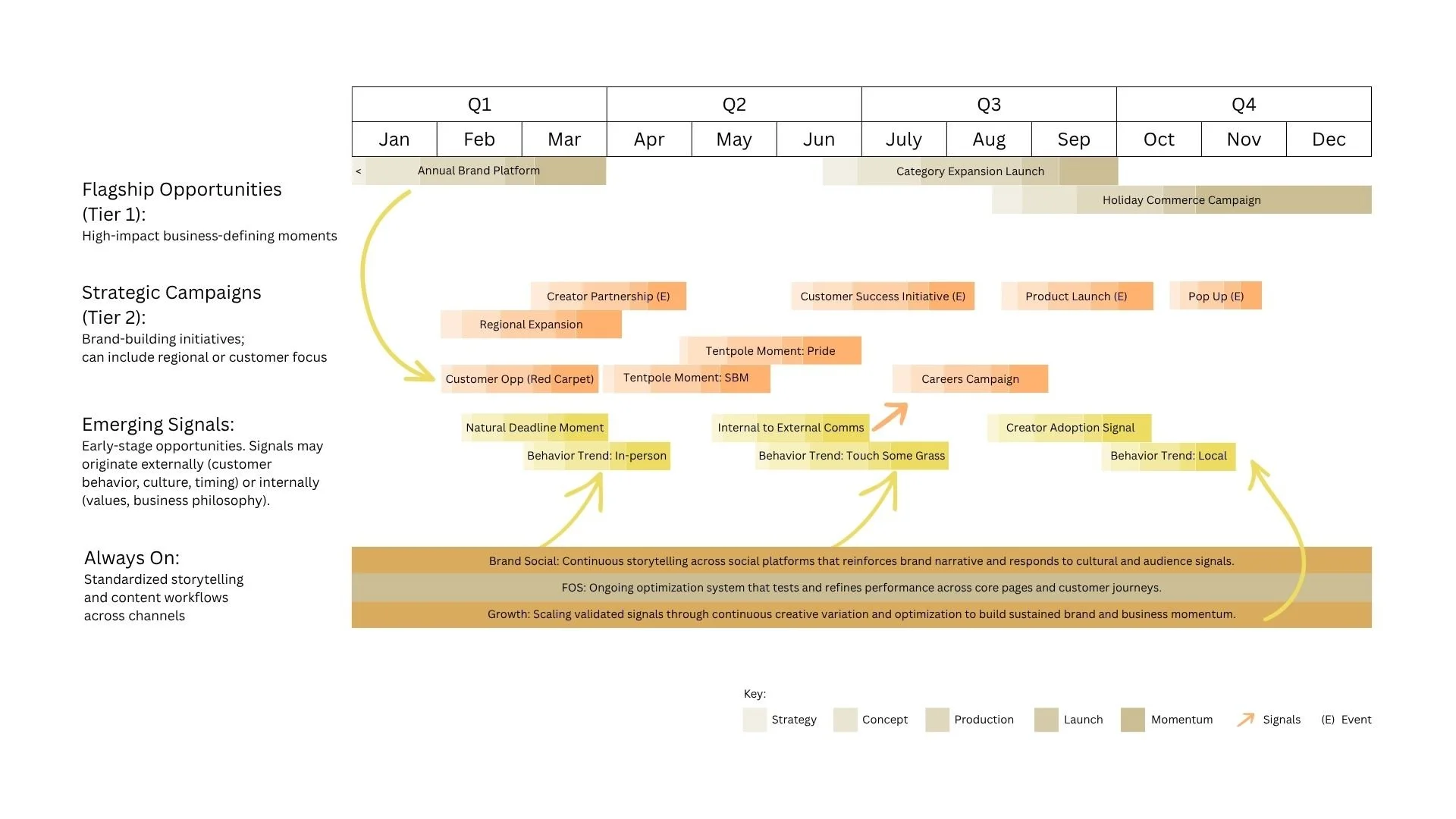
Example Opportunity
System Architecture
Not every opportunity requires the same level of investment.
The goal is not to do more. The goal is to identify the moments most capable of creating attention, resonance, and momentum, then distribute them in a way the organization can realistically support.
Illustrative example only. Actual opportunity mix varies by business strategy, resources, market dynamics, and organizational maturity.
Featured Projects
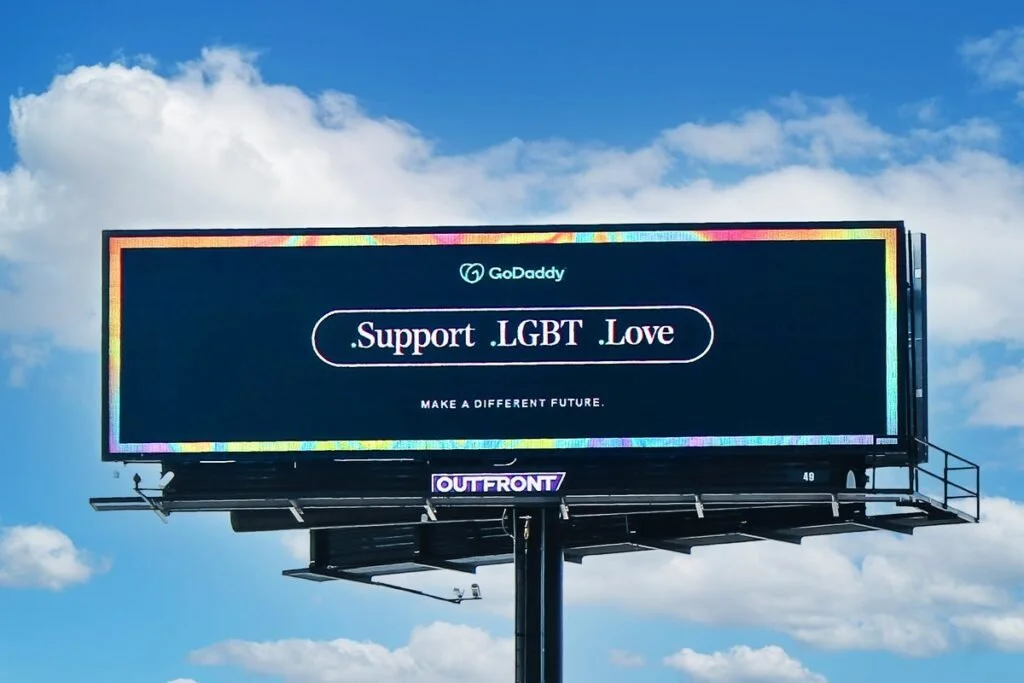
GoDaddy Registry | .gay
A niche product launch was initially scoped as a functional domain announcement within the broader GoDaddy website ecosystem, with website communications as the primary focus.
Audience signals and prior engagement with Pride-related content indicated an opportunity to take a more focused approach that could unlock stronger resonance with a specific community.
The work reframed the launch from broad product messaging into a targeted brand moment shaped by audience insight, cultural timing, and narrative opportunity.
Outcome
• One of the highest performing organic social posts of the year across GoDaddy’s Instagram ecosystem, setting a new benchmark for subsequent content performance
• Outperformed previous Pride content benchmarks across engagement and reach
• Contributed to the growth of 27,000+ registered .gay domains globally
• Supported a wider initiative generating $180,000+ in donations to LGBTQIA+ organizations including GLAAD and CenterLink
This work illustrates a core principle of the Opportunity System:
Meaningful brand moments are not limited to major launches or new technology. They emerge when existing signals are reinterpreted through audience, cultural, and timing lenses.
Previous GoDaddy Pride Work
Constant Contact |
Natural Deadline Moments (Hard Stop Behavior)
A planning hypothesis explored whether conversion performance could be improved by anchoring urgency to real-world moments rather than promotional mechanics (as these don’t always make business sense).
Behavioral research suggests that deadlines linked to meaningful events can generate 20–35% higher purchase intent than marketer-created deadlines. We hypothesized that culturally relevant moments such as Spring Break in the US and Easter in the UK and ANZ would create natural decision windows, encouraging customers to act before a meaningful date rather than defer action indefinitely.
Unlike promotional offers, which can introduce operational complexity and short-term spikes in demand, these moments tap into existing consumer mindsets and planning behaviors. By shifting messaging from open-ended intent ("I'll do this someday") to time-bound action ("I need to do this before April"), we aimed to create a stronger sense of urgency without relying on discounts.
Because these seasonal moments recur throughout the year, they also provided 4–5 repeatable opportunities to activate urgency at scale.